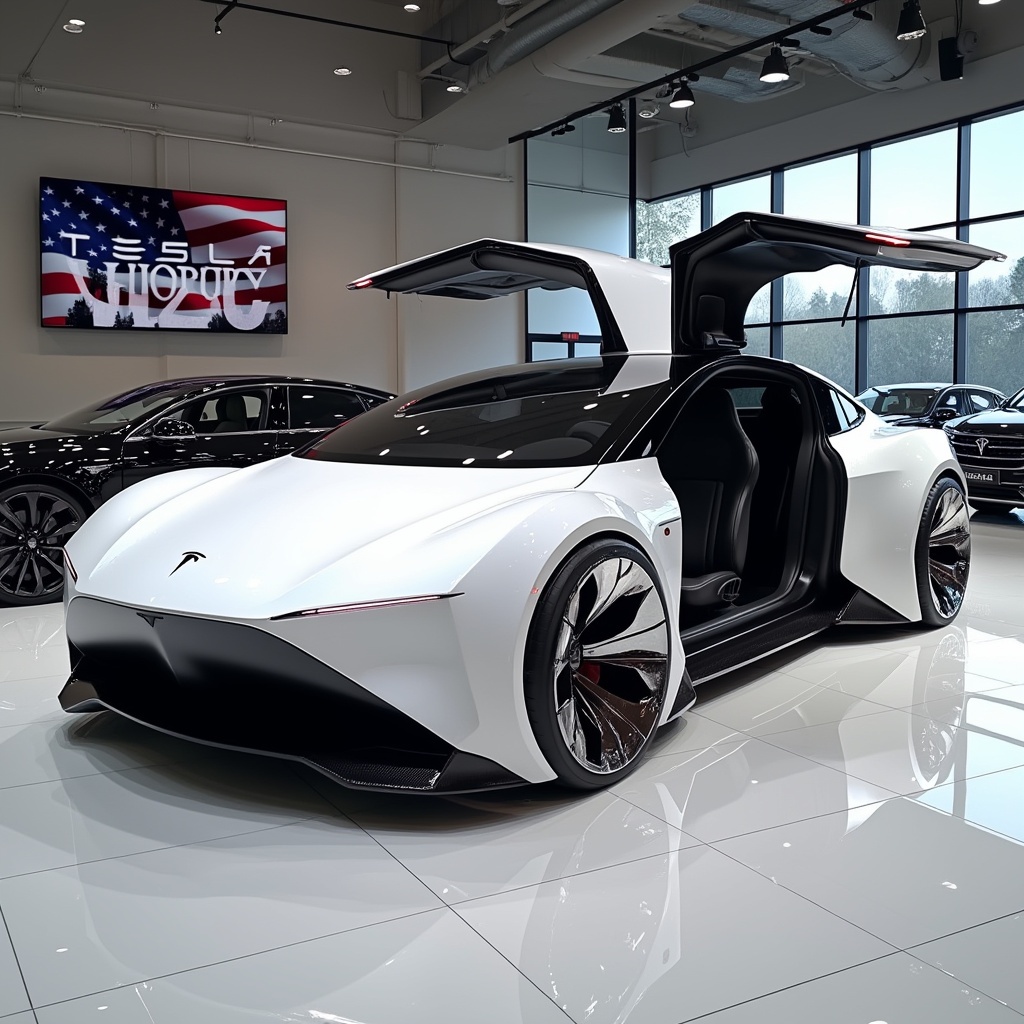
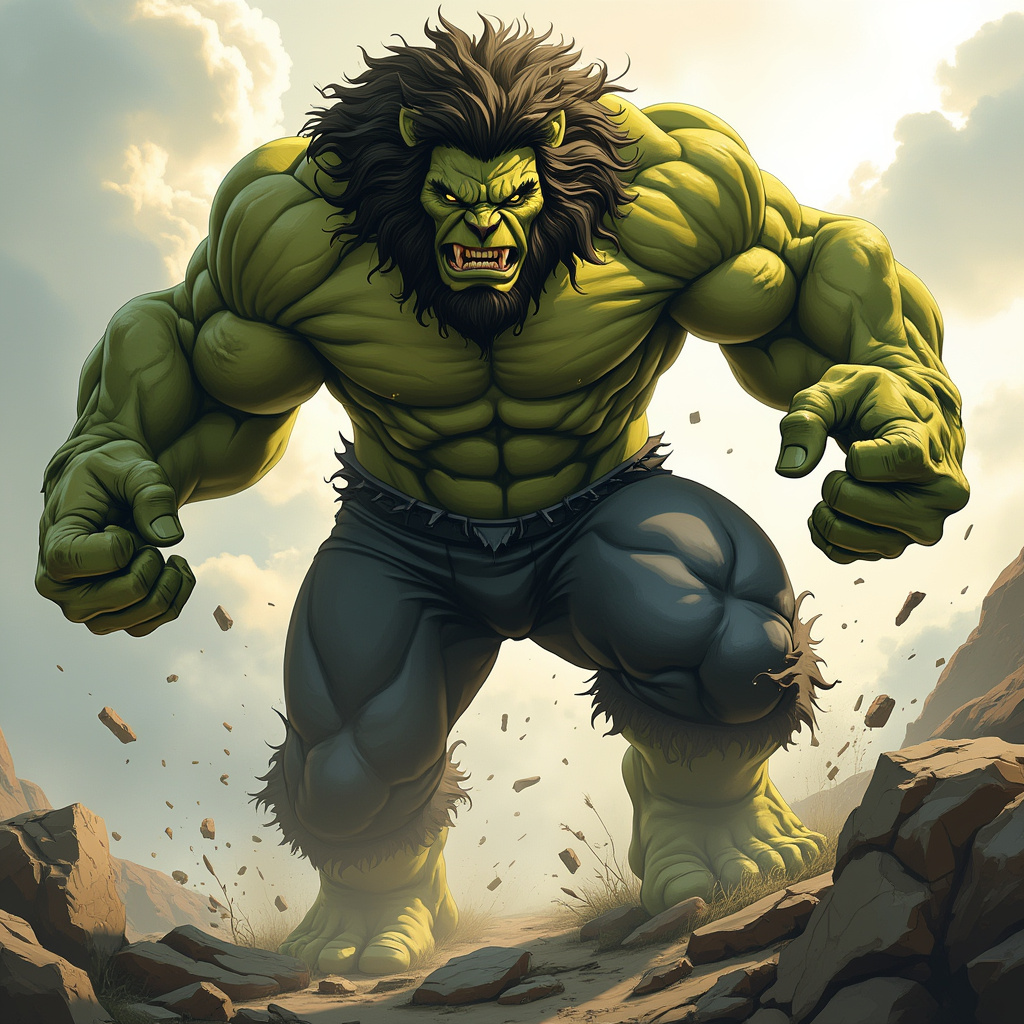
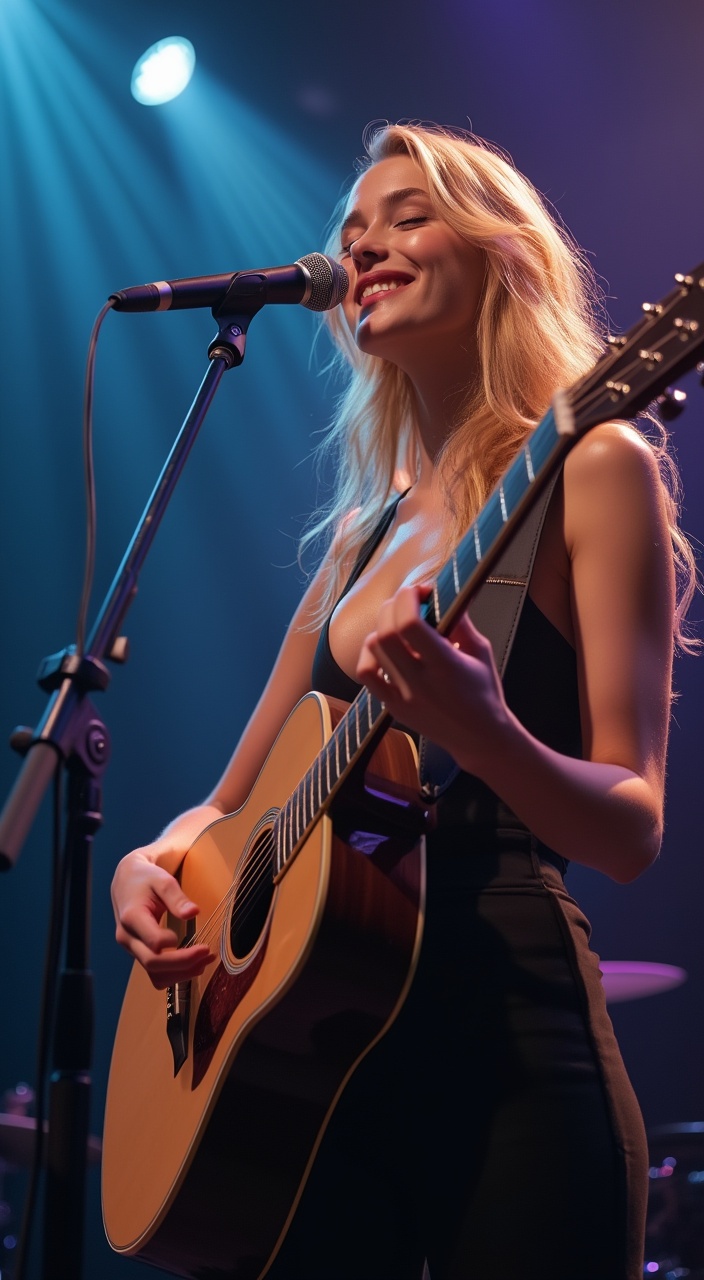
FLUX.1 Pro AI画像生成
FLUX.1-Pro、最高のAI画像生成モデルをオンラインで体験してください。FLUX.1-Proは比類のない品質、詳細、および出力の多様性を提供します。クリエイティブプロジェクトをレベルアップしましょう!
生成された画像

Emmy Noether's face as a digital mask made from thousands of bright turquoise numbers and formulas forming her face. The formulas and numbers fly behind the mask leaving a trail of complexity. The mask is floating dynamically in mid air. Her head is turned to the right but her eyes are looking directly into the camera. The mask is on a black background. Like a png with black only background. Photo realistic, sci-fy

A little girl playing in the snow wearing a yellow puffy coat, fun, cute, pigtails, dark hair, snow man, laughing
![AI generated image by FLUX.1-pro: RODIN‐COMPATIBLE PROMPT TRANSLATION
Below is a complete, section‐by‐section translation of the 2D abstract painting (a Hornlike/humanoid face with swirling, multi‐colored shapes) into a fully detailed Rodin‐style prompt. All sections are provided in full, with no partial excerpts.
1. Image Decomposition
Primary Subject
An abstract Hornlike/humanoid face rendered in a swirl of vibrant, multi‐colored regions.
Geometric Taxonomy
Head Region
A “planar mask” shape subdivided into interlocking curved polygons.
Dimensions ~1 m tall × ~0.75 m wide.
Facial Features
Eyes: Two elliptical insets (major axis ~0.15 m, minor axis ~0.09 m).
Ears: Slightly pointed triangular outlines at the top corners (~0.2 m edge length).
Nose and Mouth: Overlapping convex forms with swirling, curvilinear edges.
Background
Layered “wave” fields of swirling color patterns, arranged radially around the head.
Each wave band ~0.05 m thick.
Material Mapping
PaintedSurface [Type=Acrylic, Finish=High‐Gloss, Vibrancy=Spectral Range].
Color Layers: Dense swirl with no single base hue, generating a kaleidoscopic spectrum (≥ 80% coverage across R/G/B channels).
Pose/Orientation
Planar orientation facing forward, with a slight 5° tilt about the vertical axis.
Thickness of the artwork ≤ 1 cm along Z, preserving a flat, planar format.
2. Scene Parameterization
Optical Properties
Reflectance: “Schlick approximation BRDF with 0.65 roughness.”
Subsurface Scattering: “1.33 IOR, 2 mm scattering depth” (minimal effect on thin 2D surfaces but included for completeness).
3. Spatial Syntax
The hierarchical coordinate structure below specifies all components in Rodin format. Every subsection is fully described:
[Root: Abstract_Hornlike_Face_V1
├─Rotation: (0°, 5°, 0°)
├─Material: PaintedSurface[Type=Acrylic, Finish=High-Gloss]
└─Components
├─Ear[Count=2, Shape=Triangular, EdgeLength=0.2m]
│ └─Transform: { Position=(TopCorners), Tilt=10° outward }
├─Eye[Count=2, Shape=Ellipse, MajorAxis=0.15m, MinorAxis=0.09m]
│ └─ColorRegion: { SwirlPattern, TriplanarUVProjection }
├─Nose_and_Mouth
│ └─Contours: { LayeredConvexCurves, # of Swirls=5 }
└─Background
└─WaveField[BandCount=8, Frequency=variable]
└─Blend_Chamfer 0.01m
]
4. Physical Simulation Hints
Maintain planar integrity along the Z‐axis
Thickness must remain ≤ 1 cm to preserve the 2D artwork format.
Avoid self‐collision among adjacent swirl contours
The swirling shapes should not intersect or clip through one another.
Use OpenCascade analogs
Apply “Blend_Chamfer 0.01 m” on polygonal transitions to keep edges smooth.
Mapping Strategy
Triplanar projection is recommended for the swirling color shapes to distribute high‐frequency color transitions evenly.
5. Complete Technical Prompt
“Generate a Hornlike/humanoid planar mask (1 m × 0.75 m) composed of swirling, interlocked polygons in high‐gloss acrylic.
Use Schlick BRDF with roughness=0.65.
Apply subsurface scattering at 1.33 IOR with a 2 mm scattering depth.
Ensure swirl contours do not intersect or collide.
Use Blend_Chamfer(0.01 m) to smooth polygonal edges.
Render as a 2D plane in 3D space with a 5° tilt about the vertical axis.
Apply Gooch shading for a non‐photorealistic style (Tcool=0.6, Twarm=0.8).”
Below is a complete Rodin‐style translation for the image, presented in full detail with no omissions:
RODIN‐COMPATIBLE PROMPT TRANSLATION
1. Image Decomposition
Primary Subject
An abstract Hornlike/humanoid face rendered in a swirl of vibrant, multi‐colored regions.
Geometric Taxonomy
Head Region
A “planar mask” subdivided into interlocking curved polygons.
Approximately 1 m tall × 0.75 m wide.
Facial Features
Eyes: Two elliptical insets (major axis ~0.15 m, minor axis ~0.09 m).
Ears: Slightly pointed triangular outlines (~0.2 m edge length) positioned at the top corners.
Nose and Mouth: Overlapping convex shapes with swirling, curvilinear edges.
Background
Layered “wave” fields in swirling color patterns, arranged radially around the head.
Each band ~0.05 m thick.
Material Mapping
PaintedSurface [Type=Acrylic, Finish=High‐Gloss, Vibrancy=Spectral Range].
Color Layers: Dense swirl with no single base hue, creating a kaleidoscopic spectrum (≥ 80% coverage across R/G/B channels).
Pose/Orientation
Planar, front‐facing orientation with ~5° tilt about the vertical axis.
Artwork thickness ≤ 1 cm along Z for a relatively flat piece.
2. Scene Parameterization
Optical Properties
Reflectance: “Schlick approximation BRDF with 0.65 roughness.”
Subsurface Scattering: “1.33 IOR, 2 mm scattering depth.”
Minimal effect for very thin painted surfaces.
3. Spatial Syntax
An example hierarchical Rodin coordinate layout for all elements:
[Root: Abstract_Hornlike_Face_V1
├─Rotation: (0°, 5°, 0°)
├─Material: PaintedSurface[Type=Acrylic, Finish=High-Gloss]
└─Components
├─Ear[Count=2, Shape=Triangular, EdgeLength=0.2m]
│ └─Transform: { Position=(TopCorners), Tilt=10° outward }
├─Eye[Count=2, Shape=Ellipse, MajorAxis=0.15m, MinorAxis=0.09m]
│ └─ColorRegion: { SwirlPattern, TriplanarUVProjection }
├─Nose_and_Mouth
│ └─Contours: { LayeredConvexCurves, # of Swirls=5 }
└─Background
└─WaveField[BandCount=8, Frequency=variable]
└─Blend_Chamfer 0.01m
]
4. Physical Simulation Hints
Maintain Planar Integrity
Keep thickness ≤ 1 cm along the Z‐axis.
Avoid Self‐Collision
Prevent swirl contours from intersecting or overlapping incorrectly.
OpenCascade Analogs
Use “Blend_Chamfer 0.01 m” for smoothing polygon transitions.
UV Mapping Strategy
Triplanar projection is recommended for high‐frequency swirl color transitions.
5. Complete Technical Prompt
“Generate a Hornlike/humanoid planar mask (1 m × 0.75 m) with swirling, interlocked polygons in high‐gloss acrylic.
Apply Schlick BRDF (roughness=0.65).
Use subsurface scattering at 1.33 IOR and 2 mm depth.
Prevent collisions in swirl contours.
Blend_Chamfer(0.01 m) to smooth edges.
Render as a 2D plane in 3D with a 5° tilt about the vertical axis.
Non‐photorealistic shading (Gooch), Tcool=0.6, Twarm=0.8.”
Rodin-Compatible Text Prompt:
Primary Subject:
An abstract, cubist-inspired humanoid figure with exaggerated, asymmetrical facial features, including oversized, multi-colored eyes (left eye with concentric red and yellow rings, right eye with cyan and yellow concentric rings), a distorted, angular nose, and an open mouth showing irregular white teeth. The head features pointed, Horn-like ears with dynamic patterns.
Attributes:
Morphology: Fragmented, overlapping geometric planes with sharp edges and fluid contours creating a distorted human-animal hybrid form.
Material Properties: Smooth, high-gloss enamel-like finish with vivid, saturated colors. The surface texture exhibits layered, swirled gradients resembling marbled acrylic paint.
Secondary Elements:
Foreground: Dominant presence of the figure, occupying central space with high color contrast.
Midground: Swirling, flame-like patterns in red, orange, and yellow on the right side, creating a dynamic flow.
Background: Vibrant gradient transitioning from cool blue and green hues on the left to warm reds, pinks, and yellows on the right, filled with abstract, wavy lines and swirling motifs.
Lighting & Atmosphere:
Illumination: Flat, even lighting without clear directional shadows, emphasizing the boldness of colors and sharpness of lines.
Atmospheric Effects: High-contrast color transitions and psychedelic, fluidic swirls that create a sense of motion and depth.
Color Palette:
Dominant Colors: #FF0000 (red), #00FFFF (cyan), #FFFF00 (yellow), #FF00FF (magenta), #008000 (green), #000000 (black), #FFFFFF (white).
Harmony: Triadic contrast with bold, saturated primaries and secondaries, creating visual tension and vibrancy.
Composition & Perspective:
Framing: Tight, central composition focusing on the subject’s upper torso and face.
Perspective: Slightly skewed, flattened perspective typical of cubist works, with overlapping planes creating spatial ambiguity.
Stylistic Specifications:
Medium: Digital vector art with sharp, clean lines and high color saturation.
Genre: Neo-Cubist Psychedelic Abstract.
Post-Processing: Enhanced color saturation, high-contrast outlines, and smooth gradient blending.
Constraints & Exclusions:
Exclude photorealistic textures, naturalistic color schemes, or realistic human proportions.](/_next/image?url=https%3A%2F%2Ffluximageai.net%2Fgenerated-images%2F9d86e449-2536-48a8-ac35-468e1e7a6087.png&w=3840&q=75)
RODIN‐COMPATIBLE PROMPT TRANSLATION Below is a complete, section‐by‐section translation of the 2D abstract painting (a Hornlike/humanoid face with swirling, multi‐colored shapes) into a fully detailed Rodin‐style prompt. All sections are provided in full, with no partial excerpts. 1. Image Decomposition Primary Subject An abstract Hornlike/humanoid face rendered in a swirl of vibrant, multi‐colored regions. Geometric Taxonomy Head Region A “planar mask” shape subdivided into interlocking curved polygons. Dimensions ~1 m tall × ~0.75 m wide. Facial Features Eyes: Two elliptical insets (major axis ~0.15 m, minor axis ~0.09 m). Ears: Slightly pointed triangular outlines at the top corners (~0.2 m edge length). Nose and Mouth: Overlapping convex forms with swirling, curvilinear edges. Background Layered “wave” fields of swirling color patterns, arranged radially around the head. Each wave band ~0.05 m thick. Material Mapping PaintedSurface [Type=Acrylic, Finish=High‐Gloss, Vibrancy=Spectral Range]. Color Layers: Dense swirl with no single base hue, generating a kaleidoscopic spectrum (≥ 80% coverage across R/G/B channels). Pose/Orientation Planar orientation facing forward, with a slight 5° tilt about the vertical axis. Thickness of the artwork ≤ 1 cm along Z, preserving a flat, planar format. 2. Scene Parameterization Optical Properties Reflectance: “Schlick approximation BRDF with 0.65 roughness.” Subsurface Scattering: “1.33 IOR, 2 mm scattering depth” (minimal effect on thin 2D surfaces but included for completeness). 3. Spatial Syntax The hierarchical coordinate structure below specifies all components in Rodin format. Every subsection is fully described: [Root: Abstract_Hornlike_Face_V1 ├─Rotation: (0°, 5°, 0°) ├─Material: PaintedSurface[Type=Acrylic, Finish=High-Gloss] └─Components ├─Ear[Count=2, Shape=Triangular, EdgeLength=0.2m] │ └─Transform: { Position=(TopCorners), Tilt=10° outward } ├─Eye[Count=2, Shape=Ellipse, MajorAxis=0.15m, MinorAxis=0.09m] │ └─ColorRegion: { SwirlPattern, TriplanarUVProjection } ├─Nose_and_Mouth │ └─Contours: { LayeredConvexCurves, # of Swirls=5 } └─Background └─WaveField[BandCount=8, Frequency=variable] └─Blend_Chamfer 0.01m ] 4. Physical Simulation Hints Maintain planar integrity along the Z‐axis Thickness must remain ≤ 1 cm to preserve the 2D artwork format. Avoid self‐collision among adjacent swirl contours The swirling shapes should not intersect or clip through one another. Use OpenCascade analogs Apply “Blend_Chamfer 0.01 m” on polygonal transitions to keep edges smooth. Mapping Strategy Triplanar projection is recommended for the swirling color shapes to distribute high‐frequency color transitions evenly. 5. Complete Technical Prompt “Generate a Hornlike/humanoid planar mask (1 m × 0.75 m) composed of swirling, interlocked polygons in high‐gloss acrylic. Use Schlick BRDF with roughness=0.65. Apply subsurface scattering at 1.33 IOR with a 2 mm scattering depth. Ensure swirl contours do not intersect or collide. Use Blend_Chamfer(0.01 m) to smooth polygonal edges. Render as a 2D plane in 3D space with a 5° tilt about the vertical axis. Apply Gooch shading for a non‐photorealistic style (Tcool=0.6, Twarm=0.8).” Below is a complete Rodin‐style translation for the image, presented in full detail with no omissions: RODIN‐COMPATIBLE PROMPT TRANSLATION 1. Image Decomposition Primary Subject An abstract Hornlike/humanoid face rendered in a swirl of vibrant, multi‐colored regions. Geometric Taxonomy Head Region A “planar mask” subdivided into interlocking curved polygons. Approximately 1 m tall × 0.75 m wide. Facial Features Eyes: Two elliptical insets (major axis ~0.15 m, minor axis ~0.09 m). Ears: Slightly pointed triangular outlines (~0.2 m edge length) positioned at the top corners. Nose and Mouth: Overlapping convex shapes with swirling, curvilinear edges. Background Layered “wave” fields in swirling color patterns, arranged radially around the head. Each band ~0.05 m thick. Material Mapping PaintedSurface [Type=Acrylic, Finish=High‐Gloss, Vibrancy=Spectral Range]. Color Layers: Dense swirl with no single base hue, creating a kaleidoscopic spectrum (≥ 80% coverage across R/G/B channels). Pose/Orientation Planar, front‐facing orientation with ~5° tilt about the vertical axis. Artwork thickness ≤ 1 cm along Z for a relatively flat piece. 2. Scene Parameterization Optical Properties Reflectance: “Schlick approximation BRDF with 0.65 roughness.” Subsurface Scattering: “1.33 IOR, 2 mm scattering depth.” Minimal effect for very thin painted surfaces. 3. Spatial Syntax An example hierarchical Rodin coordinate layout for all elements: [Root: Abstract_Hornlike_Face_V1 ├─Rotation: (0°, 5°, 0°) ├─Material: PaintedSurface[Type=Acrylic, Finish=High-Gloss] └─Components ├─Ear[Count=2, Shape=Triangular, EdgeLength=0.2m] │ └─Transform: { Position=(TopCorners), Tilt=10° outward } ├─Eye[Count=2, Shape=Ellipse, MajorAxis=0.15m, MinorAxis=0.09m] │ └─ColorRegion: { SwirlPattern, TriplanarUVProjection } ├─Nose_and_Mouth │ └─Contours: { LayeredConvexCurves, # of Swirls=5 } └─Background └─WaveField[BandCount=8, Frequency=variable] └─Blend_Chamfer 0.01m ] 4. Physical Simulation Hints Maintain Planar Integrity Keep thickness ≤ 1 cm along the Z‐axis. Avoid Self‐Collision Prevent swirl contours from intersecting or overlapping incorrectly. OpenCascade Analogs Use “Blend_Chamfer 0.01 m” for smoothing polygon transitions. UV Mapping Strategy Triplanar projection is recommended for high‐frequency swirl color transitions. 5. Complete Technical Prompt “Generate a Hornlike/humanoid planar mask (1 m × 0.75 m) with swirling, interlocked polygons in high‐gloss acrylic. Apply Schlick BRDF (roughness=0.65). Use subsurface scattering at 1.33 IOR and 2 mm depth. Prevent collisions in swirl contours. Blend_Chamfer(0.01 m) to smooth edges. Render as a 2D plane in 3D with a 5° tilt about the vertical axis. Non‐photorealistic shading (Gooch), Tcool=0.6, Twarm=0.8.” Rodin-Compatible Text Prompt: Primary Subject: An abstract, cubist-inspired humanoid figure with exaggerated, asymmetrical facial features, including oversized, multi-colored eyes (left eye with concentric red and yellow rings, right eye with cyan and yellow concentric rings), a distorted, angular nose, and an open mouth showing irregular white teeth. The head features pointed, Horn-like ears with dynamic patterns. Attributes: Morphology: Fragmented, overlapping geometric planes with sharp edges and fluid contours creating a distorted human-animal hybrid form. Material Properties: Smooth, high-gloss enamel-like finish with vivid, saturated colors. The surface texture exhibits layered, swirled gradients resembling marbled acrylic paint. Secondary Elements: Foreground: Dominant presence of the figure, occupying central space with high color contrast. Midground: Swirling, flame-like patterns in red, orange, and yellow on the right side, creating a dynamic flow. Background: Vibrant gradient transitioning from cool blue and green hues on the left to warm reds, pinks, and yellows on the right, filled with abstract, wavy lines and swirling motifs. Lighting & Atmosphere: Illumination: Flat, even lighting without clear directional shadows, emphasizing the boldness of colors and sharpness of lines. Atmospheric Effects: High-contrast color transitions and psychedelic, fluidic swirls that create a sense of motion and depth. Color Palette: Dominant Colors: #FF0000 (red), #00FFFF (cyan), #FFFF00 (yellow), #FF00FF (magenta), #008000 (green), #000000 (black), #FFFFFF (white). Harmony: Triadic contrast with bold, saturated primaries and secondaries, creating visual tension and vibrancy. Composition & Perspective: Framing: Tight, central composition focusing on the subject’s upper torso and face. Perspective: Slightly skewed, flattened perspective typical of cubist works, with overlapping planes creating spatial ambiguity. Stylistic Specifications: Medium: Digital vector art with sharp, clean lines and high color saturation. Genre: Neo-Cubist Psychedelic Abstract. Post-Processing: Enhanced color saturation, high-contrast outlines, and smooth gradient blending. Constraints & Exclusions: Exclude photorealistic textures, naturalistic color schemes, or realistic human proportions.

cat

Close-up portrait realism of a tall,slim, compact figure, with a small chest and narrow hips,she is also slightly slender, young Alien woman, 28 years old, green-skinned, with a long, wavy mass of black hair with red and purple highlights, and large purple eyes with golden circles, has a heart-shaped face, high cheekbones, no eyebrows but golden lines ending on her cheeks, black leather jumpsuit with black pants

Establishing shot. Camera positioned next to passenger side door. Well lit underground garage. Impeccably restored yellow 1941 DeSoto convertible with the top down. tan leather seats. Wood-colored dashboard. light tan carpet covering completely level floorboard. A beautiful very petite French woman about 33 years old is sitting next to the closed left door in the left part of the front seat with her legs under the steering wheel. She is as far away from the camera as she can be inside the car. Both feet resting on the floorboard close to the pedals. The woman has a pale complexion with rosy cheeks, and long light brown hair gathered into a bun. Lipstick and light eye makeup. Serene gaze. Slight smile hoop earrings She is wearing a luxurious tight-fitting cream off-shoulder top 3/4 sleeve, a tight-fitting black pencil miniskirt hemmed above the knees, black ultra high heel slides with a small red bow on the vamp. Camera focused on feet and pedals Shot includes both feet. Strong light behind the camera illuminating the floorboard and feet. .

Two very tall beautiful women in underwear embrace a small young desperate man in random place

una bandada de pájaros volando en un atardecer

BNSF ES44AC

3D model, octane volumetric rendering, highly detailed video game, a transparent bottle with wine inside, cartoon with an angry face, with arms and legs, with a wall with graffiti in the background
FLUX.1-Proで最高品質の画像を生成する方法
FLUX.1-Proを使用して無類のビジュアルを作成する手順を以下に示します。
- テキストプロンプトを入力し、FLUX.1-Proを使用して希望の設定を選択します。
- FLUX.1-Proで最高品質の画像を生成するボタンを押します。
- FLUX.1-Proで多様な出力を探索するためにプロセスを繰り返します。
よくある質問
FLUX.1-Proは何に使われますか?
FLUX.1-Proは、比類のない品質、詳細、および出力の多様性を備えた最先端の画像生成を提供するための最高のモデルであり、プロフェッショナルグレードの視覚コンテンツに最適です。
FLUX.1-Proは他のモデルとどう違いますか?
FLUX.1-Proは、優れたプロンプト追従性、視覚品質、および詳細な出力で際立っています。高解像度で多様な画像を提供し、プロフェッショナルな使用に最適です。
FLUX.1-Proはどのような画像品質を提供しますか?
FLUX.1-Proは、FLUXモデルの中で最高の画像品質を提供し、卓越した詳細、色の正確さ、および鮮明さを備えており、トップクラスの視覚的な優秀さを求めるプロジェクトに最適です。
FLUX.1-Proはすべての目的に無料で使用できますか?
はい、FLUX.1-Proは個人、科学、および商業プロジェクトのために無料で使用でき、高価なクローズドソースの代替品を必要とせずに最高の品質を提供します。
FLUX.1-Proの画像にはどのライセンスが適用されますか?
FLUX.1-Proによって生成された画像は、Apache-2.0ライセンスの下で公開されており、商業プロジェクトを含むさまざまな分野での広範な使用を許可し、変更および配布の柔軟性を提供します。
FLUX.1-Proで最高の結果を得るためのアドバイスはありますか?
FLUX.1-Proで最適な結果を得るために、非常に詳細なプロンプトを使用し、設定を試して、プロフェッショナルグレードの高品質な画像を生成する能力を最大限に活用しましょう。